


Artificial intelligence is rapidly changing how companies operate, how people work, and how essential services are delivered. AI can help researchers analyze complex data, support medical discovery and diagnosis, strengthen cybersecurity, improve energy management, and make some tasks faster and more accessible. It can also create serious risks, including privacy violations, fraud, discriminatory outcomes, misinformation, weapons development and deployment, other unsafe or harmful uses, job displacement, and growing demands on electricity, water, and local communities.
For investors, the question is not simply whether a company is “exposed to AI.” As AI becomes more embedded in business operations across sectors and regions, it has become difficult to draw a clear line between “AI” and “non-AI” companies. Companies may develop models, operate the computing infrastructure that supports them, incorporate AI into products and services, or use it internally, even if they are not considered strictly AI companies. Because of this, it is difficult to calculate a single figure that represents a company’s or a portfolio’s “AI exposure,” and AI use alone is not a determining factor in our investment decisions. The more relevant question is how companies are designing, deploying, governing, and powering these technologies, and how they manage their effects on people and the environment. Our guiding principle remains the same for AI as for other topics: What impact is the company having on the ground?
At Domini, we do not view AI as inherently positive or negative. Instead, we look at how companies develop and use AI in practice. We evaluate AI-related businesses, like all companies considered for investment by the Domini Funds, through our Impact Investment Standards. Our Standards seek to advance two goals: universal human dignity and ecological sustainability.
Applying Our Standards
Domini’s research process evaluates companies in two steps. First, we assess how closely a company’s business model aligns with our goals. Second, we examine how the company manages its relationships with key stakeholders, including customers, employees, suppliers, communities, investors, and ecosystems. This approach recognizes that a company may offer useful products or services while still creating significant risks through its operations, supply chain, workforce practices, or environmental footprint.
Key performance indicators, or KPIs, help our research team apply these Standards to the most material issues facing particular industries. They are not a checklist that can substitute for judgment. Instead, they guide our research process and organize the questions we ask, the evidence we assess, and the areas where we may seek improvement through company engagement. They help us assess whether a company is intentionally managing its industry’s key sustainability challenges.
AI is a fast-changing area with significant potential benefits and significant risks. To guide our analysis of companies whose businesses are directly tied to AI, Domini’s Standards Committee recently adopted new sets of KPIs for two AI-related subindustries: AI Model Developers, Applications and Agents, and AI Cloud Infrastructure. These subindustry-specific KPIs provide more tailored guidance for evaluating the distinct environmental, social, and governance issues associated with companies in each area, while informing our case-by-case research and engagement. For companies in other industries that use AI or offer AI-enabled products and services, we apply the primary KPIs relevant to their own industries, and we also pay particular attention to AI-related issues such as privacy, data use, bias, and the effects of automation on workers and communities. In some instances, we may use both sets of KPIs.
Both subindustries are identified as partially aligned with Domini’s goals. In other words, AI can support beneficial outcomes, but its potential harms require careful, company-specific evaluation.
Two AI-Related Subindustries
The Standards Committee distinguished between these two types of AI-related businesses because their impacts and responsibilities differ. A company is generally classified in either subindustry when these activities account for more than half of its revenue.
AI Model Developers, Applications and Agents includes companies that design, train, deploy, or commercialize AI models and the applications that use them. These companies may develop the foundational systems that recognize patterns and generate outputs, or build tools that use those systems to complete tasks.
AI Cloud Infrastructure includes pure-play companies whose primary business is providing AI computing infrastructure, such as AI-focused cloud services, data center capacity, and specialized networking. This infrastructure provides the computing power that enables AI systems to operate at scale.
The partially aligned designation reflects AI’s capacity to support productivity, research, innovation, and other useful purposes, alongside material risks that companies must identify and manage. Each subindustry’s KPIs focus on the risks most relevant to its business model.
AI Models and Applications
For AI model developers, applications, and agents, Domini assesses the societal value of products and services as well as their intended and foreseeable uses. AI may support health care diagnostics, scientific research and development, cybersecurity, forecasting, and faster workflows with lower operational costs. These uses can create meaningful benefits when they are designed and deployed responsibly.
At the same time, AI systems can be used in ways that create severe harm. Our analysis considers whether a company derives revenue from applications linked to weapons, misinformation and deepfakes, large-scale fraud, AI companion products that encourage emotional dependence among minors, or other uses that may threaten safety, human rights, or democratic institutions. We also consider how companies address risks related to bias, privacy, contested training data, and misuse by customers or other users.
Governance and transparency are central to this work. Relevant practices include meaningful human oversight and board-level accountability, guided by recognized AI risk management frameworks and supported by third-party audits or external assurance, as well as controlled access to models and code and support for credible AI safety and regulatory frameworks. We look for companies to disclose model capabilities and safety testing before products are widely deployed, including testing models before safeguards are applied, red-teaming that simulates malicious misuse, and retesting to confirm that safeguards are effective. We also consider whether companies limit the personal data they collect and clearly explain how users’ data is used. Lobbying against safety regulations, material misrepresentation of model capabilities or safety, and patterns of significant privacy violations or data breaches are serious concerns.
AI Infrastructure
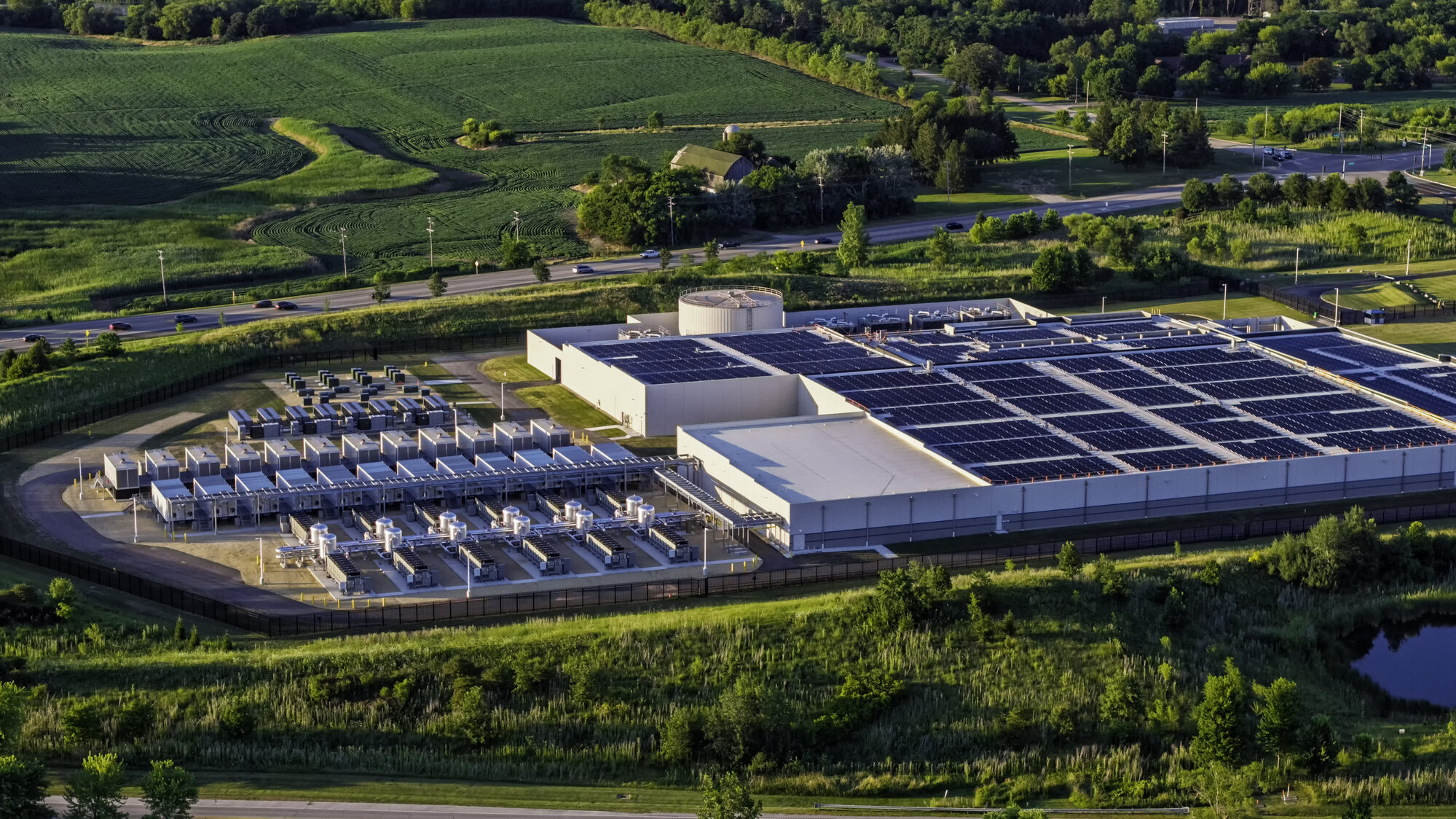
AI cloud infrastructure may enable research, innovation, and wider access to AI capabilities. When the information is available, we consider how much of a company’s capacity serves beneficial uses, such as research institutions and health care. It may also support investment in renewable energy generation and grid improvements. However, AI computing and data centers can have substantial environmental and community impacts because they require significant electricity, water, land, equipment, and construction materials.
For companies that provide AI cloud infrastructure, Domini’s research examines energy and water use, renewable energy procurement, investment in renewable generation, and disclosure of Scope 1, Scope 2, and Scope 3 greenhouse gas emissions. We also consider energy and water efficiency, including power usage effectiveness (PUE) and water usage effectiveness (WUE), as well as transparency about water sourcing and investment in closed-loop, liquid-cooled designs that can reduce water use.
Community impacts are equally important. New data centers can affect local grid reliability, energy prices, water availability, land use, and the pace of the transition away from fossil fuels. We assess the transparency of companies’ siting practices and whether they disclose potential effects on local communities, including risks that development could increase fossil fuel generation, delay planned retirements of fossil fuel facilities, or shift costs to households.
Our research also considers responsible sourcing and supply chain management, including potential exposure to forced labor, conflict minerals, and safety concerns related to construction and equipment suppliers.
People, Work, and Accountability
AI’s effects extend beyond the companies that develop models and operate infrastructure. They affect workers whose jobs may change, customers whose information may be used, and communities whose resources may support new facilities.
Some AI systems rely on people to read, rate, and rank AI-generated outputs to train models, or to review harmful material as content moderators. For companies using these human-in-the-loop processes, Domini considers the treatment of workers, including those employed through contractors and subcontractors. Relevant factors include living wages and mental health support for workers who may be exposed to disturbing content.
We also consider whether companies are helping workers and communities navigate potential disruption from AI. This may include workforce transition programs and efforts to broaden access to science, technology, engineering, and mathematics (STEM) for groups affected by AI-driven job displacement.
Engaging Companies on AI
Our research informs how we invest, and engagement is a tool to encourage companies to further align with our expectations and improve their practices. Through constructive dialogue, collaboration with other investors, and proxy voting, we engage companies on how they develop, deploy, and power AI. Because AI’s impacts reach across the value chain, from the chips and hardware that make it possible to the data centers that run it and the businesses that adopt it, our engagement does too. As both shareholders and bondholders, we can raise these issues with a broad range of companies, including some that rarely hear from investors.
Climate and environmental impacts are a central focus. AI is increasing demand for electricity, water, and hardware, and many of the resulting emissions occur in supply chains and in the places where new facilities are built. We encourage companies across the AI value chain to set science-based emissions-reduction targets, prioritize clean energy use and optimize efficiency, incentivize and support suppliers to reduce emissions, and be transparent about their energy and water use. We also ask how companies engage with nearby communities, including the channels they make available for community input, protections against higher electricity costs, and how that input shapes their plans to reduce risks.
We also focus on how AI impacts people. We ask companies how they assess and address the human rights risks associated with their technologies, including how they review higher-risk uses and whether employees and others can raise concerns about potential human rights risks linked to their products without fear of retaliation. As companies adopt AI, we ask how AI fits within their overall workforce strategy, how they plan for workforce transitions, how they measure success beyond efficiency gains, and how they consult and support workers whose roles may change. Across these issues, we encourage strong governance and meaningful disclosure, so investors and other stakeholders can see how responsible AI works in practice.
Our KPIs help us identify where to focus these conversations, and what we learn through engagement, in turn, informs our research.
An Evolving Framework
The effects of AI will depend on choices made by companies, policymakers, investors, and communities. Technological capability alone is not a measure of societal progress. Domini believes innovation should be accompanied by strong safeguards, respect for human rights, responsible environmental management, and accountability to affected stakeholders. The KPIs for these two subindustries provide a structured foundation for research and engagement with companies whose business models are directly connected to AI. They also complement the broader Impact Investment Standards that guide our evaluation of companies across the economy. As the technology, its uses, and its effects continue to evolve, Domini will continue to refine its research and engage companies and policymakers on the environmental and social issues that matter most.