

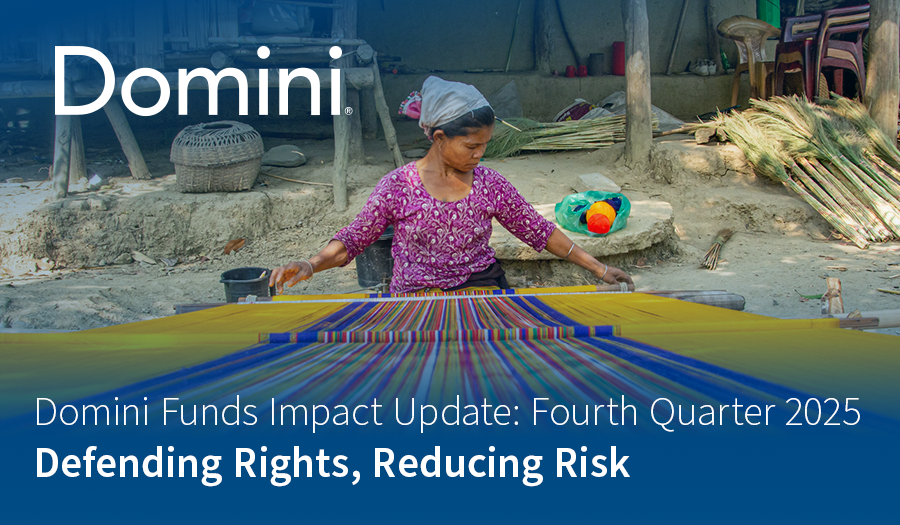
In today’s interconnected world, investors can no longer ignore the social and environmental costs embedded in global supply chains. Decades of progress have shown that companies now recognize their responsibility for working conditions even when production is outsourced, yet significant human rights risks persist. Increasingly, investors are looking beyond risk identification to evaluate whether companies have effective systems to prevent, address, and remediate harm. This has brought new attention to grievance mechanisms and access to remedy—critical but still underdeveloped components of corporate human rights programs.
This quarter, we also focused on the investment relevance of human rights defenders, who often provide early warnings about environmental and social impacts that can escalate into operational disruptions or legal challenges. Companies with strong policies, anti‑retaliation safeguards, and meaningful engagement practices are better positioned to navigate these risks.
At the same time, innovations in worker compensation and safety nets show how systemic improvements can strengthen supply‑chain stability and long‑term value. Together, these trends highlight why credible human rights programs are not peripheral but foundational to resilient, responsible businesses and investment portfolios.